
Why Knits Pill, and How to Take It Off
CARE GUIDE
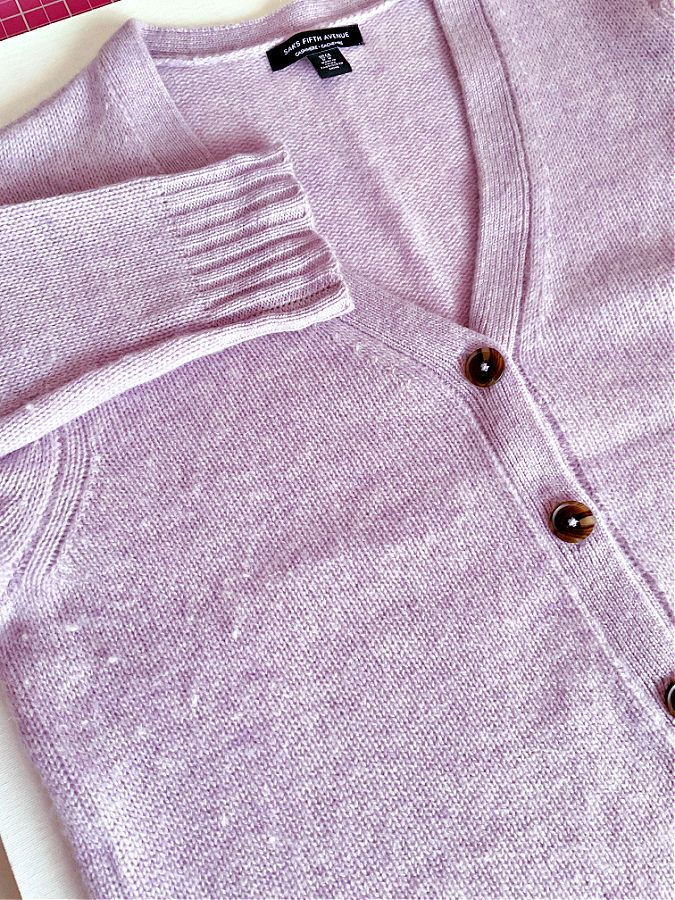
Pilling is easy to misread. Small balls appear on the sleeve and the assumption is that something has gone wrong with the sweater. In almost every case nothing has. Pilling is what spun yarn does when it is rubbed, and knowing why it happens tells you both how to remove it properly and how to slow it down.
What a Pill Actually Is
Spun yarn is made of short fibers twisted around each other. The twist holds them together, but the ends of those fibers are not glued in place. Rubbing works a few of them loose, they stand up off the surface, and friction rolls them into a small ball. That ball stays attached because one longer fiber is still anchored in the yarn, which is why a pill hangs on rather than falling off.
Two things follow. First, a pill is made of fiber that has already left the yarn structure, so taking it off removes nothing the garment still needs. Second, fiber length matters: yarn spun from longer fibers has fewer loose ends per inch and pills more slowly.
Where It Shows Up First
Pills form where the fabric rubs against something, which makes the map predictable. They show up under the arms where the sleeve meets the body, down one side where a bag strap sits, across the front where a seatbelt crosses, at the cuffs and forearms from a desk edge, and on the back wherever a chair or a coat lining catches.
A brand new knit often sheds a little in its first outings as the loosest fiber ends work free, and then settles down. That early flurry is normal and it is not a preview of what the surface will do forever.
Taking Pills Off Without Damaging the Surface
Lay the piece flat on a hard surface. A table works; a bed does not, because the fabric needs to be supported and slightly taut so the tool meets the pills rather than the loops around them.
A sweater comb, which is a small square of fine metal teeth, is the gentle option and it suits fine and mid weight knits. Hold the fabric flat with one hand, and draw the comb across the surface in one direction with light pressure. Short repeated strokes do more than one long firm pass.
A battery fabric shaver is faster and it suits heavier, denser knits. Keep it moving, keep it flat, and never press. The blade sits behind a guard for a reason, and pressing pushes the guard into the loops.
Two things to avoid. Do not pull pills off with your fingers, because the anchoring fiber is still part of the yarn and pulling drags it out. Do not use scissors, because the point where a pill meets the surface is exactly where the loop is, and one slip makes a hole out of a cosmetic issue.
Slowing It Down
Rest a knit for a day between wearings. Fibers under constant compression and body heat stay slightly matted, and a day flat lets them recover, which reduces the surface fuzz that turns into pills.
Wash it inside out and inside a mesh laundry bag, on a cold gentle cycle. Most pilling that appears after a wash was created by the wash: a machine drum is an abrasion machine, and the bag keeps the knit from rubbing against everything else in it.
Dry flat rather than hung. A wet knit is heavy and a hanger pulls the shoulders and the body out of shape while it dries, which stresses the yarn as well as the outline.
When Pilling Means Something
Pilling that appears everywhere at once, including on parts of the garment that never touch anything, points at the yarn rather than at wear. That is worth telling us about. So is a surface that starts thinning rather than balling. Our About Us page explains what we look at in a knit before it goes into stock, and the FAQs page covers what to do if something is not behaving.
Thank you for shopping with us, and for keeping good knitwear in the rotation.