
What to Wear Under a Sweater
STYLING
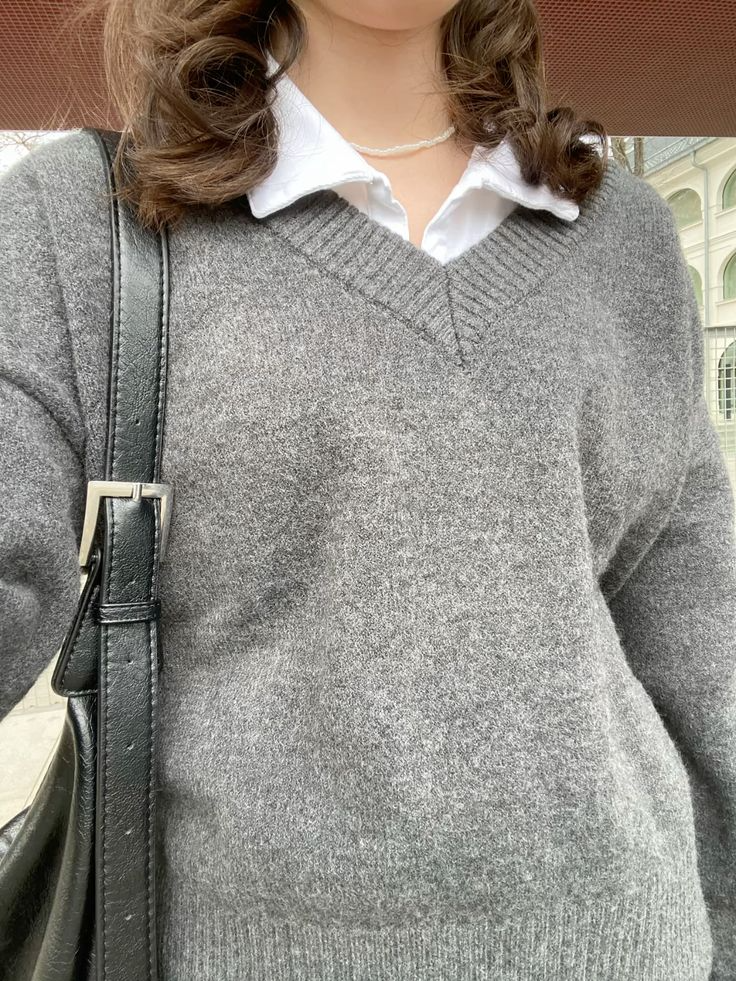
The layer under a knit does two jobs at once. It decides how often the sweater has to be washed, and it supplies most of the visible detail: the collar, the cuff, and whatever shows at the hem. Getting it right is mostly a matter of deciding what you want to show and then choosing something thin enough to disappear where you do not.
Why a Base Layer Helps the Sweater
Knitwear worn against bare skin absorbs body oil and moisture straight into the yarn, which is what makes a sweater need washing. Since washing is the most stressful thing that happens to a knit, a thin base layer that takes the sweat instead means the sweater goes into the machine far less often.
It also solves the itch question. A fiber that feels prickly on the inside of the forearm is usually perfectly comfortable once there is a smooth layer between it and the skin, so a base layer widens the range of knits you can actually wear.
The Invisible Option
A fine ribbed tank or a close fitting long sleeve tee in a smooth knit is the base layer that shows nothing. Two rules make it work: it has to be close to the body, because anything loose bunches under the sweater and prints a lump through the surface, and its seams should be flat rather than bulky for the same reason.
Keep it a shade close to your skin tone or a neutral if there is any chance of it showing through a pale or loosely knit sweater. A dark base under a light knit reads as a shadow from a distance.
The Collar Reveal
A shirt collar under a crewneck is a standard move, and it works because it puts a clean structured line right under the face, where a knit neckline on its own is soft. A point collar sits flatter under a knit than a spread collar, which needs a wider neckline to sit without buckling.
How much should show: enough to read as deliberate, roughly the depth of the collar band, and no more. If the collar is fighting the neckline and riding up on one side, the neckline is too narrow for that collar rather than the collar being wrong.
A mock neck or a turtleneck removes this option entirely, which is part of the appeal. There is nothing to arrange.
Cuffs and Hems
A shirt cuff showing at the wrist is the same idea as the collar, on a smaller scale. Half an inch is plenty. It reads as intentional, and it also protects the knit cuff from the desk edge, which is where forearm pilling comes from.
Hems are where most layered outfits go slightly wrong. A shirt tail peeking out from under a sweater is fine when it is clearly out, sitting an inch or two below the knit hem. What looks accidental is a base layer ending within half an inch of the sweater hem, appearing and disappearing as you move.
Layering Under a Chunky Knit
Heavier knits need less underneath, not more. A sleeveless base is often the right answer, because two sleeves inside one thick sleeve restricts the arm and creates a drag line at the elbow. A collar can still work under a heavy crewneck, but only if the neckline is wide enough to let the collar lie flat.
If you want the reasoning behind how we describe necklines, cuffs, and hems in the first place, that sits on our About Us page.
Thank you for shopping with us, and for keeping good knitwear in the rotation.